In this article
The quiet ones are moving fastest.
While most asset management companies are still debating whether AI belongs in their marketing function, a handful are already using it to personalise investor communication, compress campaign timelines, and free their teams from work that was never worth their talent in the first place.
By the time the debate settles, the gap will already exist.
This is not a technology story. It is a strategy story. And like every strategy story in asset management, the ones who move with clarity and intention win. The ones who wait for consensus lose ground they cannot buy back.
The problem with how AMCs are approaching AI right now
Most fund houses are approaching AI the way they approached digital ten years ago — cautiously, reactively, and departmentally. One team experiments with a tool. Another team hears about it in a conference. The CMO gets asked about it in a board meeting and gives a measured answer about exploring possibilities.
Meanwhile, the investor landscape is shifting underneath them.
Investors today — retail and institutional — are interacting with AI-powered interfaces every day. Their expectations of communication speed, personalisation, and relevance are being shaped by experiences outside financial services. When your investor communication still runs on a fortnightly newsletter cycle and a generic WhatsApp broadcast, the gap between expectation and experience widens quietly and consistently.
The damage does not show up in one quarter. It shows up over three years as declining engagement, weakening brand recall, and a distribution network that finds it easier to push a competitor's product because that competitor's marketing simply makes their job easier.
What an AI strategy for your AMC actually means
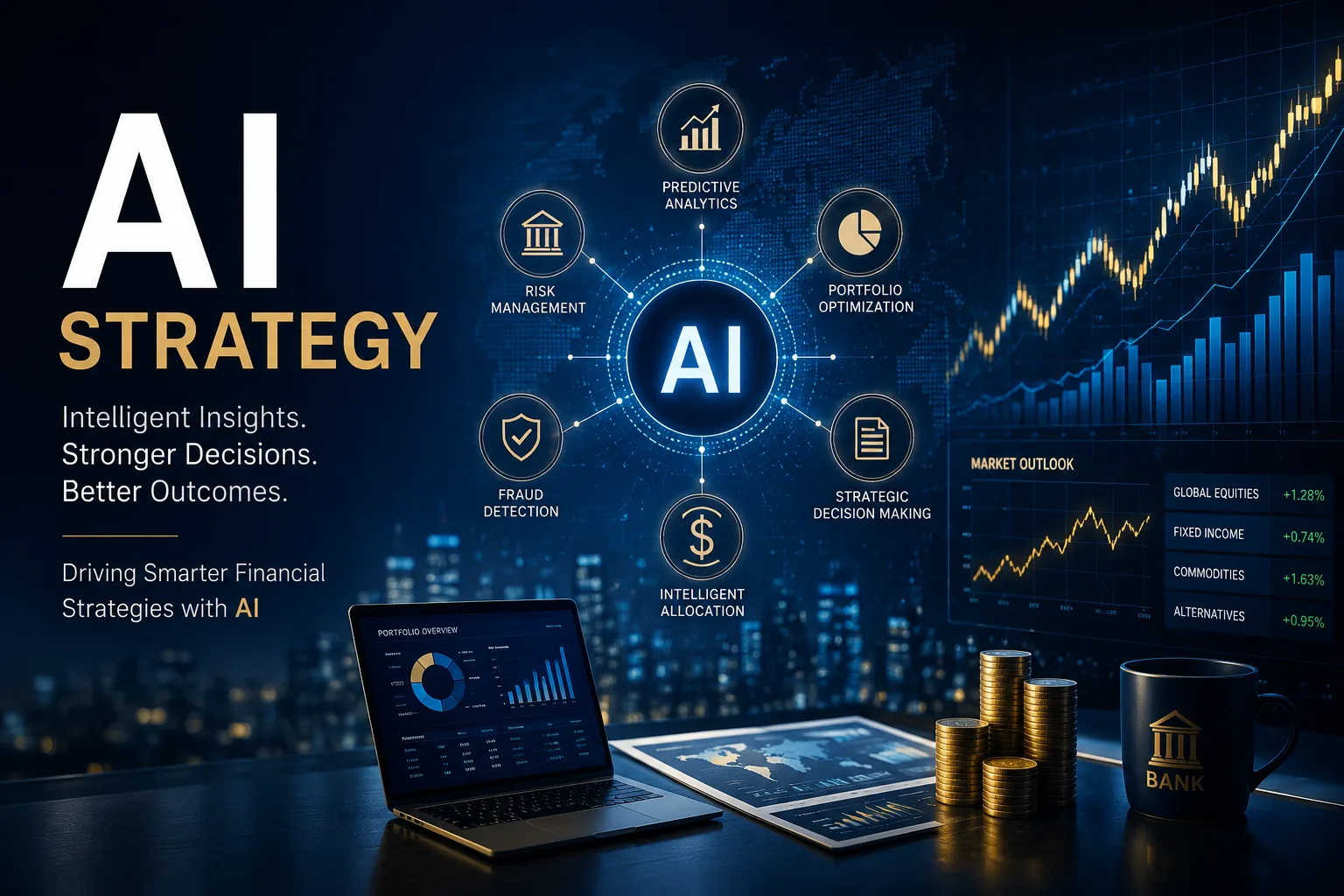
An AI strategy is not a list of tools your team is going to try. It is a deliberate decision about where AI will create the most value in your marketing and distribution function — and a clear plan for how you will get there without compromising compliance, trust, or brand integrity.
For most AMCs, that value lives in four places:
Investor communication. The volume of communication an AMC needs to produce — across fund categories, investor segments, distributor networks, and regulatory requirements — is enormous. AI can compress production timelines dramatically while maintaining consistency of voice and compliance with SEBI guidelines. The result is not more content. It is the right content reaching the right investor at the right moment.
Distributor enablement. Your relationship managers and distribution partners need material that is relevant, timely, and easy to use. AI allows you to personalise enablement content at a scale that was previously impossible without a significantly larger team. A distributor in Tier 2 India needs different context than one in Mumbai. AI makes that distinction affordable.
Market intelligence. AMC marketing teams spend considerable time manually tracking competitor activity, market sentiment, and investor behaviour signals. AI compresses this dramatically — freeing senior marketers to spend their time on interpretation and decision-making rather than aggregation.
Campaign execution. From A/B testing subject lines to optimising digital spend allocation, AI brings a layer of continuous improvement to campaign execution that manual processes simply cannot match at speed.
Why waiting is the riskiest position
There is a version of caution that is strategic. And there is a version that is simply fear wearing the clothes of prudence.
In asset management, where brand trust is the ultimate distribution asset, caution feels responsible. But the AMCs that are moving on AI right now are not being reckless. They are being deliberate. They are building internal capability, testing in low-risk environments, and establishing governance frameworks before they scale.
That deliberateness takes time to build. Which means the AMCs starting now will have twelve to eighteen months of learning, iteration, and institutional muscle that late movers will have to acquire in a compressed and expensive window.
The competitive advantage in AI is not the tool. It is the organisational learning that accumulates around the tool over time.
Where to start
If you are a CMO or marketing head at an AMC reading this and wondering where to begin, the answer is simpler than the noise around AI suggests.
Start with your single biggest communication bottleneck. The place where your team is producing the most volume with the least strategic leverage. That is almost always the right entry point — because it gives you a concrete problem to solve, a measurable outcome to track, and a contained environment to learn in before you scale.
From there, build governance before you build scale. Define what your brand voice means in an AI-assisted environment. Establish clear boundaries around what AI produces independently and what requires human review. Document your process. This is not bureaucracy — it is the foundation that allows you to move faster and with more confidence as your capability grows.
The AMCs that will lead their category in three years are not the ones with the most sophisticated AI tools today. They are the ones building the clearest strategic intent around AI right now.
The window is open. It will not stay open.
Every major shift in financial services marketing — digital distribution, social media, video — followed the same pattern. Early movers built advantage. Late movers paid a premium to catch up. Some never did.
AI is following the same pattern, at a faster pace and with higher stakes.
The question for every AMC CMO is not whether to build an AI strategy. That decision has already been made by the market. The question is whether you build it now, on your terms, with the time and clarity to do it right — or later, under pressure, chasing a gap that someone else created.
Your investors, your distributors, and your board will all eventually ask the same question: what is our AI strategy?
The best time to have a compelling answer is before they ask.
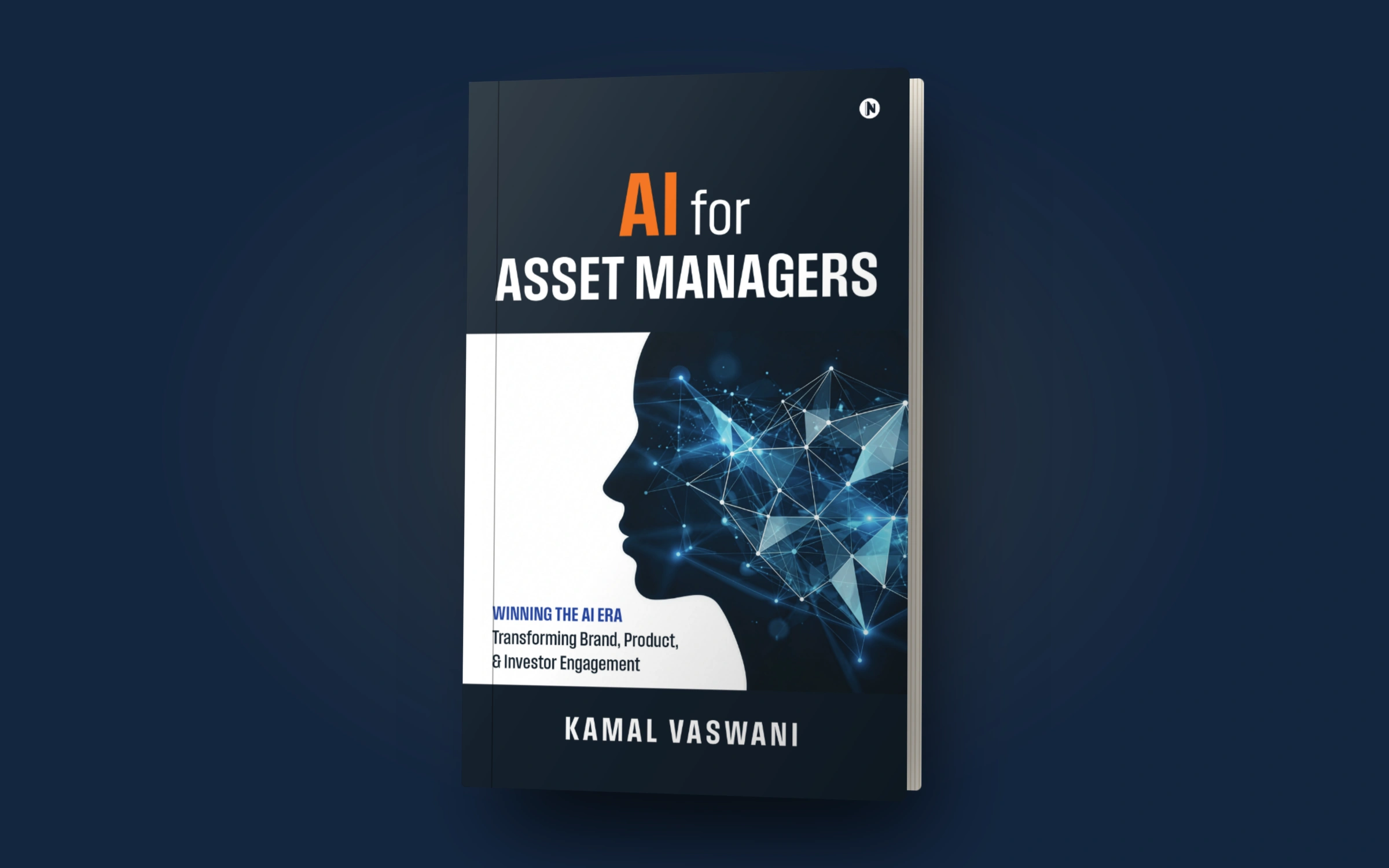
Kamal Vaswani is the author of AI for Asset Managers: Winning the AI Era, available on Amazon, Flipkart and Ingram. She is the founder of BYLAAR and the creator of the TRUST-AI™ framework.
 Written byKamal VaswaniFounder, BYLAAR · Author, AI for Asset Managers: Winning the AI Era