In this article
A growing financial firm needs the same quality of marketing decisions as a large one. It rarely needs, or can justify, a full-time CMO to make them. That gap is what the fractional CMO model exists to fill.
What "fractional" actually means
A fractional CMO is a senior marketing leader who works with your firm for a defined part of each month, on a retainer, and holds real responsibility for the marketing function. Not advice from the sidelines: ownership of the strategy, direction of the team and agencies, and accountability for what the marketing builds.
The difference from a full-time hire is the shape of the commitment, not the seniority. You get the judgement of someone who has run launches, managed agency rosters and built brands under regulatory scrutiny, scoped to what your firm needs at its current stage.
What a fractional CMO is not
- Not an agency. An agency executes to a brief. A fractional CMO writes the brief, decides which work matters and holds agencies to it.
- Not a consultant who leaves a report. A diagnostic is often the starting point, but the role continues into leading the work.
- Not a replacement for your team. The aim is a stronger in-house team, with clearer priorities and better briefs, not a team that depends on an outsider.
What the role covers in a financial firm
The mandate depends on the firm, but in asset management, wealth and advisory businesses it usually spans six areas.
1. Strategy and positioning
Who the firm is for, what it stands for and where it can win. In crowded categories, "disciplined", "long-term" and "investor-first" describe almost everyone. Positioning means finding what only your firm can credibly say, and writing it down on one page every team can use.
2. One story across every channel
Investors meet a firm in many places before they read a factsheet: the website, the founder's LinkedIn, Instagram, a distributor's WhatsApp forward. If those tell different stories, the firm looks smaller than it is. A fractional CMO makes them tell one.
3. Launches planned backwards
Many launches don't fail on creativity; they fail on the calendar. Content reaches compliance late, comes back with changes, and the campaign starts half-built on the day it should be peaking. Planning backwards from launch day, with the story, approvals and distributor material ready before day one, changes that.
4. Distribution marketing
In Indian asset management especially, the story often reaches the investor through a distributor or partner. Content they can use and forward with confidence is as important as content written for investors directly.
5. Team and agency direction
Clear briefs, clear owners and a monthly review of what's working. This is often where the quickest gains appear, because the spend is already there; it just lacks direction.
6. Governed use of AI
Marketing teams are adopting AI quickly. A fractional CMO in a regulated firm sets the standard for how it's used, so the speed it brings doesn't come at the cost of accuracy, consistency or compliance.
When the model fits, and when it doesn't
The fractional model tends to fit when a firm is preparing a launch, entering a new segment or market, working with a new leadership team, covering an open marketing role, or spending on agencies without a clear strategy behind the work.
It fits less well when a firm needs someone physically present every day to run a large team, or when the real need is execution capacity rather than leadership. In those cases, a full-time hire or a strong agency may be the better answer, and a good fractional CMO will say so.
A simple test: if your marketing has activity but not direction, the gap is leadership. If it has direction but not enough hands, the gap is capacity. A fractional CMO solves the first.
How to judge a fractional CMO
- Relevant experience. Have they led marketing inside regulated financial businesses, including launches?
- A clear first 90 days. Can they describe how they'll listen, diagnose, set direction and hand over a plan your team can run?
- Scope in writing. What they'll lead, how their time is allocated and how success will be reviewed each month.
- A view on compliance. Do they plan it in at the start, or treat it as a final hurdle?
- Honesty about fit. Will they tell you if you need something else?
How BYLAAR approaches it
BYLAAR Advisory starts with a free 30-minute conversation, then a Marketing Diagnostic: a senior review of brand, channels, content, team, agencies and martech, delivered as a prioritised 90-day plan. If there's a fit, the work continues as a fractional CMO engagement, scoped to the firm's needs and reviewed every month, with TRUST-AI™ as the framework for any AI use along the way.
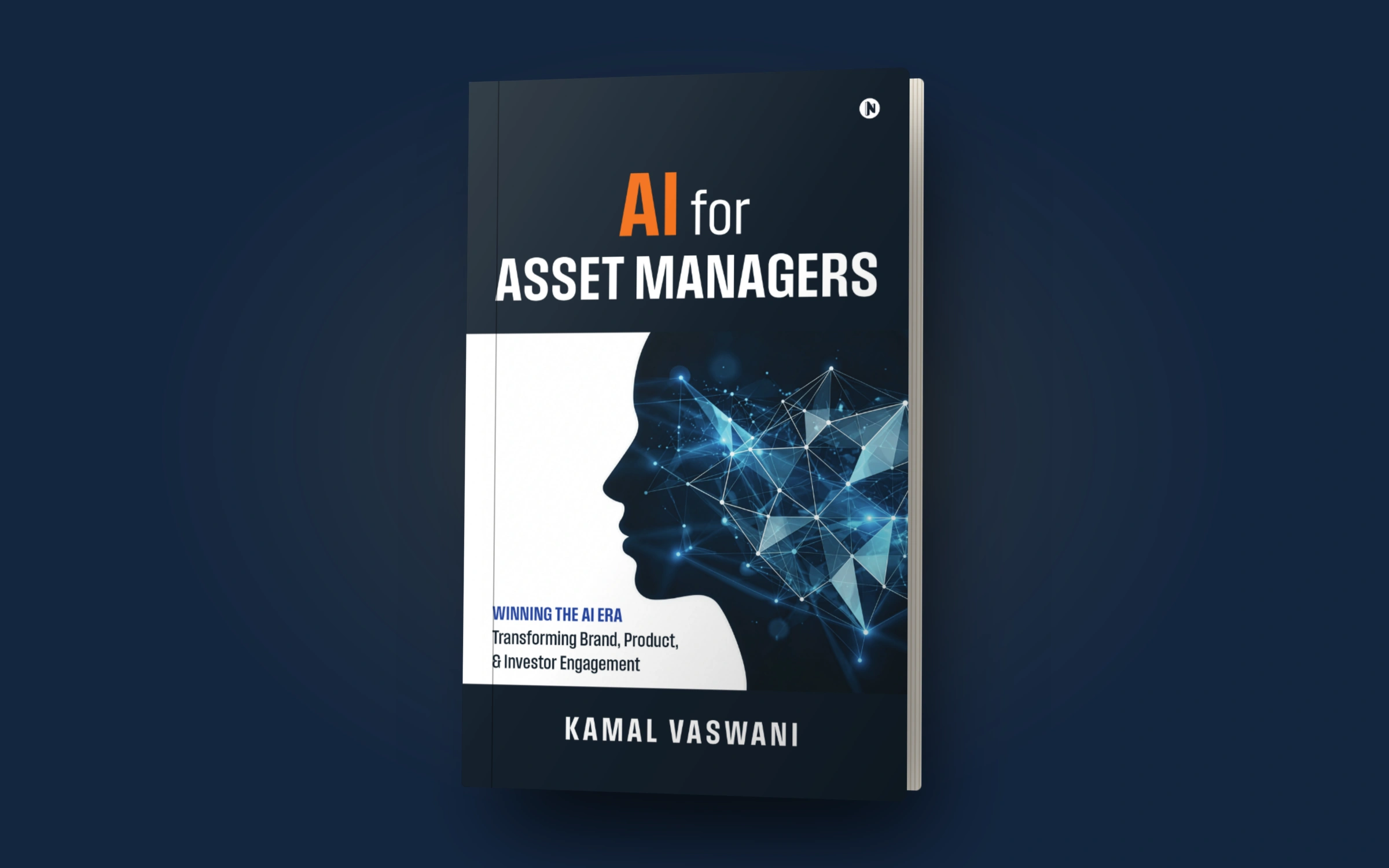
Kamal Vaswani is the author of AI for Asset Managers: Winning the AI Era, available on Amazon, Flipkart and Ingram. She is the founder of BYLAAR and the creator of the TRUST-AI™ framework.
 Written byKamal VaswaniFounder, BYLAAR · Author, AI for Asset Managers: Winning the AI Era