In this article
Your distributors are not your clients. But you have been marketing to them as if they are.
This is the foundational error that most AMCs have built their entire marketing function around — and it is quietly costing them AUM, distributor loyalty, and investor trust at the same time.
Client marketing in asset management was never supposed to be a brochure business. It was supposed to be the function that builds the bridge between what a fund house believes about markets and what an investor needs to hear to make confident, long-term decisions. Somewhere along the way, that bridge became a pipeline for product pushes, NAV updates, and compliance-approved content that nobody reads twice.
The good news is that the fix is available. The bad news is that it requires AMC leadership to be honest about what went wrong before they can build what comes next.
What broke it
Client marketing in most AMCs suffers from three structural problems that compound each other.
It was built around products, not investors. The typical AMC marketing calendar is organised by fund launches, NFOs, and quarterly reviews. Every communication is anchored to a product event rather than an investor moment. The result is a function that is permanently reactive — producing material because a product requires it, not because an investor needs it. Investors experience this as noise. Distributors experience it as pressure. Neither outcome serves the fund house.
It confused reach with relevance. Volume became the proxy for effectiveness. How many emails went out. How many WhatsApp messages were sent. How many distributor meets were conducted. These are activity metrics, not outcome metrics. An AMC can have the highest communication volume in its category and still have the weakest investor engagement — because reach without relevance is just interruption at scale.
It never truly owned the investor relationship. In most AMCs, the investor relationship is owned by the distributor. Marketing's role was to support that relationship with material — not to build a direct, meaningful connection with the end investor. This made strategic sense in an era when distribution was the only channel that mattered. It makes far less sense today, when direct investing is growing, digital touchpoints multiply every year, and investors are increasingly capable of forming their own views about which fund house deserves their trust.
These three problems did not appear overnight. They accumulated over years of prioritising short-term distribution targets over long-term brand equity. And they will not be fixed by a new campaign or a better creative agency.
What the best AMCs are doing differently
The fund houses that are pulling ahead on client marketing share one characteristic: they have made a deliberate decision to treat marketing as a trust-building function, not a sales support function.
That distinction changes everything downstream.
They segment by investor moment, not investor category. Instead of producing content for "retail investors" or "HNI investors" as monolithic groups, they think about where investors are in their financial journey. A first-time SIP investor needs different communication than an investor reviewing their portfolio after a market correction. A retiree thinking about capital preservation needs a different voice than a young professional building wealth for the first time. Investor moment segmentation produces communication that feels personal even when it is reaching thousands of people simultaneously.
They enable distributors instead of pushing product at them. The shift from product push to distributor enablement is subtle but significant. Enablement means giving your distribution network the tools, context, and confidence to have better conversations with investors — not just the latest fund factsheet. It means understanding what questions investors are asking distributors right now and equipping your network to answer them with clarity and conviction. When distributors feel genuinely supported rather than commercially pressured, their advocacy for your fund house becomes authentic. Authentic advocacy is the most powerful distribution asset an AMC can build.
They invest in investor education as a long-term brand strategy. The AMCs with the strongest brands in India did not build them through advertising. They built them by consistently helping investors understand markets, manage expectations, and make better decisions over time. Investor education is not a CSR initiative. It is the highest-return marketing investment an AMC can make — because it builds the kind of trust that survives market downturns, leadership changes, and competitive pressure.
The role AI plays in fixing this
None of the fixes above are new ideas. What is new is the capability to execute them at a scale and speed that was previously impossible for most AMCs outside the top five.
AI changes the economics of personalisation. Producing segmented communication for twelve different investor moments used to require a team and a budget that most mid-sized AMCs could not justify. Today, with the right framework and the right tools, a lean marketing team can produce genuinely relevant communication across multiple investor segments without proportionally increasing headcount or cost.
AI changes the speed of distributor enablement. Market events move fast. Investor sentiment shifts quickly. The AMCs that can respond to a market development with a well-crafted, distributor-ready communication within hours — not days — are the ones whose distribution network will reach for their material first when an investor asks a difficult question.
AI changes the depth of investor understanding. The signals that investors send through their digital behaviour — what they read, what they ignore, what they search for, what they ask — are richer than anything a quarterly survey could capture. AI makes it possible to listen to those signals systematically and let them shape communication strategy in near real time.
The technology does not fix the structural problems. Leadership decisions fix the structural problems. But once those decisions are made, AI dramatically accelerates the execution.
Where to begin
The AMC CMOs who are making the most progress on this are not starting with technology. They are starting with a single honest question: who are we actually trying to serve with our marketing, and what does serving them well look like?
That question, answered seriously, usually reveals the gap between what client marketing is currently doing and what it needs to do. From that gap, you can build a prioritised plan — not a transformation roadmap that takes three years to show results, but a focused set of changes that produce visible outcomes within a quarter.
Start with your investor communication. Audit the last six months of outgoing communication and ask — honestly — whether any of it would make an investor feel more confident, more informed, or more loyal to your fund house. If the answer is largely no, you have found your starting point.
Then fix the brief. Not the creative. Not the channel. The brief. Because client marketing that is broken at the brief level cannot be fixed at the execution level, no matter how good your agency or how large your budget.
The function that asset management needs
Client marketing in asset management has the potential to be one of the most strategically powerful functions in a fund house. It sits at the intersection of brand, product, distribution, and investor trust — which means it has leverage that almost no other function possesses.
Realising that potential requires AMC leadership to stop treating marketing as a cost centre that supports sales and start treating it as a value centre that builds the long-term health of the business.
The AMCs that make that shift in the next two years will look back at this moment as the point where they separated themselves from the competition.
The ones that do not will spend the following decade wondering why their distribution network feels increasingly transactional and their investor base increasingly disloyal.
Client marketing is not broken beyond repair. But it does need leadership that is willing to fix it from the foundation up.
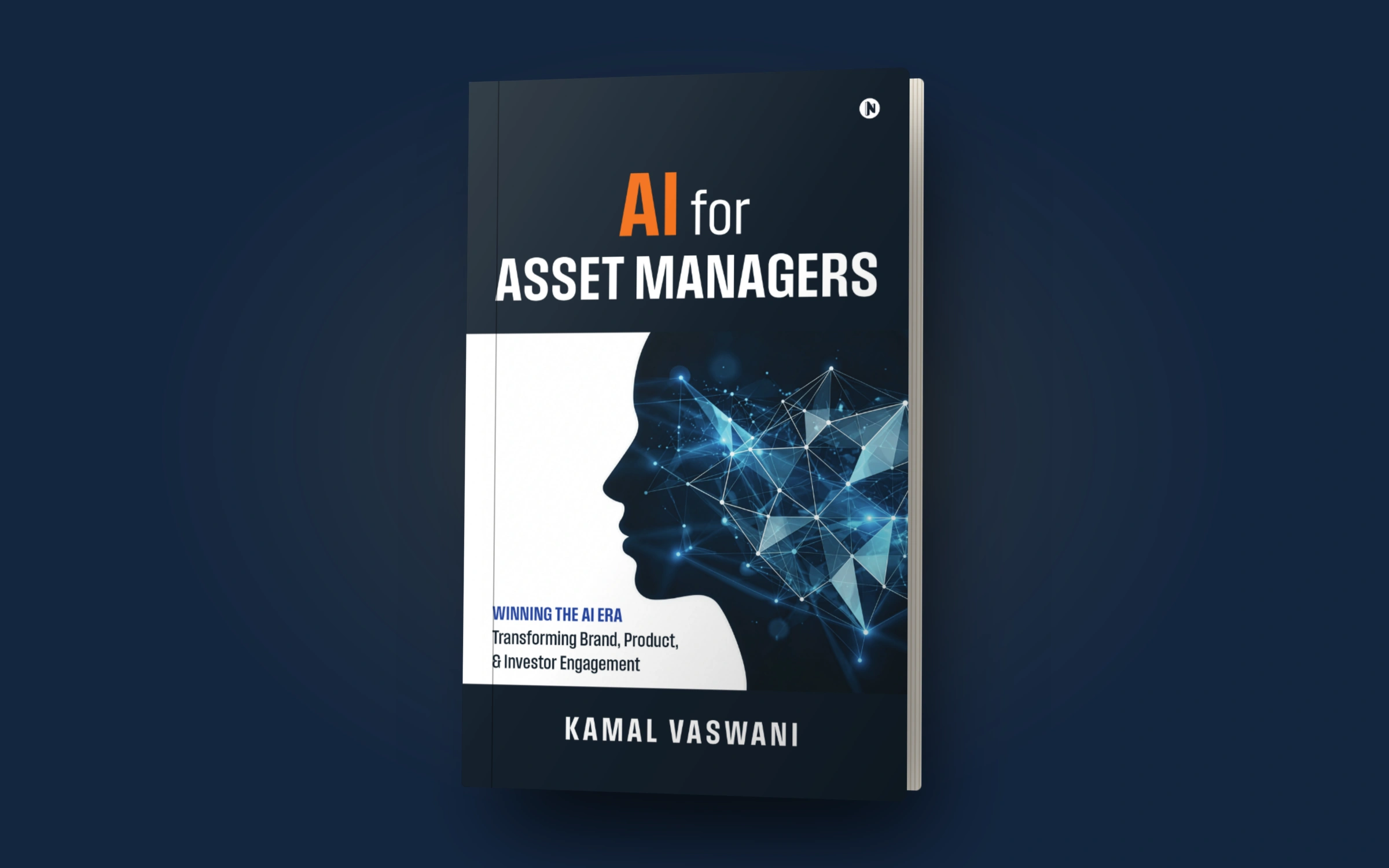
Kamal Vaswani is the author of AI for Asset Managers: Winning the AI Era, available on Amazon, Flipkart and Ingram. She is the founder of BYLAAR and the creator of the TRUST-AI™ framework.
 Written byKamal VaswaniFounder, BYLAAR · Author, AI for Asset Managers: Winning the AI Era