In this article
India is the fastest growing mutual fund market in the world right now.
Europe built its asset management marketing infrastructure over five decades. The mistakes were made, corrected, and institutionalised into frameworks that most Indian AMCs have never studied — because when you are growing at the pace India is growing, it is easy to believe that the playbook can be written from scratch.
It cannot.
The most expensive lessons in financial services marketing are the ones that have already been learned somewhere else. Europe learned them through market crashes, regulatory overhauls, investor confidence crises, and a decades-long reckoning with what it actually means to build trust at scale in a complex, multi-language, multi-culture financial landscape.
India is about to face versions of the same tests. The AMCs that have studied what Europe learned will be better prepared. The ones that have not will pay for the same education — in AUM, in brand equity, and in investor trust.
The scale illusion
The first thing Europe learned — painfully, over time — is that growth disguises structural weakness until it cannot anymore.
In the early years of European asset management expansion, particularly through the 1990s and early 2000s, AUM growth was strong enough to mask almost every marketing and communication failure. Investors were entering the market. Distributors were growing their networks. Fund launches were generating attention. The numbers looked good.
Then the dot-com crash arrived. Then the global financial crisis. And suddenly the structural weaknesses that growth had been covering became impossible to ignore. Investors who had never truly understood what they owned panicked and exited. Distributors who had been selling on momentum had nothing substantive to say when markets turned. Fund houses that had built their brand on performance had no relationship to fall back on when performance disappointed.
India's mutual fund industry is in a growth phase that feels invincible. SIP registrations are at record highs. Retail participation is expanding into Tier 2 and Tier 3 cities. AUM numbers are generating genuine excitement at the board level.
This is precisely the moment to build what Europe built too late — the communication infrastructure, the investor education framework, and the brand depth that holds up when the market stops doing the marketing for you.
What Europe got right — eventually
European asset management marketing went through three distinct phases that are directly relevant to where India sits today.
Phase one: product marketing. Everything was organised around funds. Performance numbers. Fund manager profiles. Asset class stories. The investor was a passive recipient of product information. Communication was largely one-directional and largely driven by distribution incentives. Sound familiar?
Phase two: investor education. After the crises of the early 2000s, European regulators — particularly in the UK, Germany, and the Netherlands — pushed fund houses hard on transparency and investor understanding. MiFID, UCITS regulations, and a series of investor protection frameworks forced AMCs to communicate differently. Not just what a fund does, but what it means for an investor's specific situation. Risk disclosure went from fine print to front and centre. Investor education became a strategic imperative, not a compliance checkbox.
The fund houses that embraced this shift — that genuinely invested in helping investors understand what they owned and why — emerged from the regulatory pressure with stronger brands, more loyal investor bases, and distribution relationships built on trust rather than incentive. The ones that treated it as a compliance exercise lost ground they never fully recovered.
Phase three: relationship marketing. The most sophisticated European asset managers eventually arrived at a model where marketing was not organised around products or even around investor education — it was organised around long-term investor relationships. Communication was personalised, contextual, and continuous. The goal was not to sell a fund. It was to be the financial partner an investor trusted across market cycles, life stages, and financial goals.
This is where the best asset management marketing in Europe sits today. And it is where India's leading AMCs need to be building — not in ten years, but now.
The regulatory lesson India cannot afford to ignore
One of the most significant lessons from European asset management marketing is the relationship between regulation and brand strength.
In India, there is a tendency to experience SEBI guidelines as constraints on marketing creativity and communication speed. In the short term, they are. In the long term, they are the framework within which the most trusted brands in Indian asset management will be built.
Europe learned that the fund houses which got ahead of regulation — which built transparency, clarity, and investor-first communication into their brand DNA before they were required to — ended up with a significant competitive advantage when regulatory requirements tightened for everyone. Because they had already built the internal capability, the communication frameworks, and the investor trust that compliance-driven late movers were scrambling to construct under pressure.
SEBI's direction over the last several years has been consistently toward greater transparency, greater investor protection, and greater accountability in financial communication. The Indian AMCs that are reading that direction correctly and building toward it proactively are the ones that will have the strongest brands when the regulatory environment inevitably tightens further.
This is not speculation. It is the European playbook, read forward into the Indian context.
The distribution dependency problem
European asset management spent twenty years being too dependent on intermediary distribution — and paid a significant price for it.
When distribution incentives drove fund selection more than investor suitability, mis-selling followed. When mis-selling followed, regulatory intervention followed. When regulatory intervention followed, distribution economics changed dramatically — and the fund houses that had invested in direct investor relationships and strong brand equity were far better positioned to adapt than those that had simply ridden the distribution wave.
India's mutual fund industry has a distribution dependency that mirrors where Europe was fifteen years ago. The shift toward direct investing is underway but still nascent. The regulatory direction on distribution incentives is clear. The investor sophistication curve is accelerating.
The AMCs that are investing now in direct investor relationships, digital brand building, and communication strategies that work independently of distributor advocacy are building the infrastructure that will matter most in the market that is coming — not the market that exists today.
What India has that Europe never did
This is not an argument for copying Europe. India has structural advantages in asset management marketing that European fund houses would have found extraordinary.
Digital infrastructure at scale. The ability to reach an investor in a Tier 3 city with personalised, contextually relevant communication through their smartphone — at a cost that is a fraction of what European AMCs spent building physical distribution networks — is a genuinely transformational capability that India possesses and Europe built its entire industry without.
A young investor base. The median age of the Indian SIP investor is significantly younger than the European mutual fund investor. This means longer investment horizons, greater openness to digital communication, and a genuine opportunity to build investor relationships from the earliest stage of financial life — before habits, loyalties, and biases are entrenched.
AI as a native capability. European asset managers are retrofitting AI onto marketing infrastructure built for a different era. Indian AMCs have the opportunity to build AI into their marketing architecture from the foundation up — which is an advantage that compounds over time in ways that are difficult to overstate.
The question is not whether India can learn from Europe. The question is whether Indian AMCs will learn the right lessons — the ones about trust, transparency, and long-term investor relationships — before the market forces them to, or after.
The window that exists right now
India's mutual fund industry is at an inflection point that European asset management passed through decades ago. The decisions that Indian AMC CMOs make in the next three to five years about how to build investor communication, how to structure distributor relationships, and how to deploy AI in their marketing function will determine which fund houses lead the category for the next generation.
Europe's experience offers a map. Not a perfect one. Not one that translates without adaptation. But a map drawn by people who navigated the same terrain — the tension between growth and trust, between distribution dependence and direct relationships, between short-term commercial pressure and long-term brand equity.
The fastest growing mutual fund market in the world does not need to make the same mistakes that the most mature ones already made.
It needs to read the map, adapt it to Indian realities, and build something better.
That is the opportunity sitting in front of every AMC marketing leader in India right now.
The only question is who picks it up first.
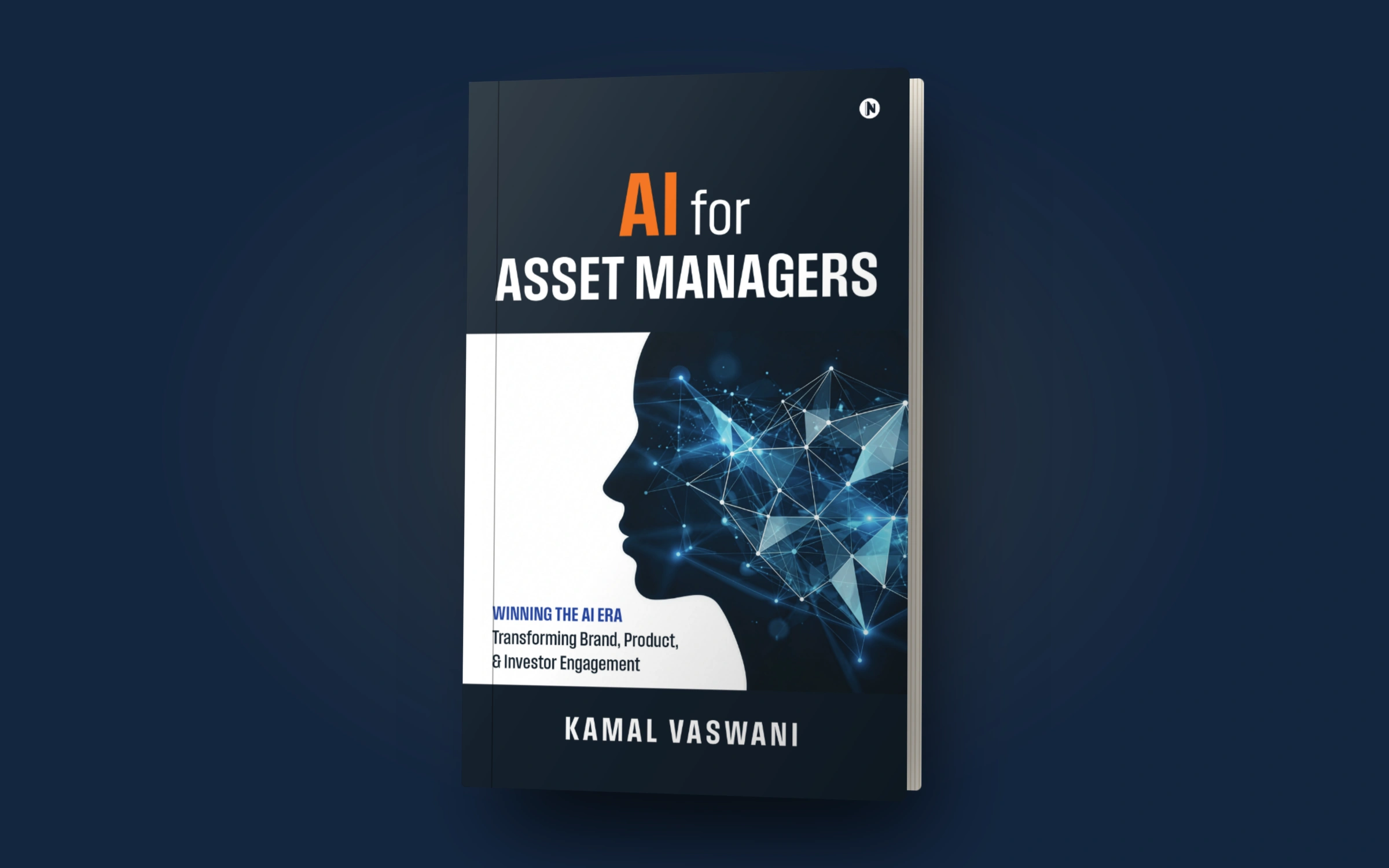
Kamal Vaswani is the author of AI for Asset Managers: Winning the AI Era, available on Amazon, Flipkart and Ingram. She is the founder of BYLAAR and the creator of the TRUST-AI™ framework.
 Written byKamal VaswaniFounder, BYLAAR · Author, AI for Asset Managers: Winning the AI Era